
Your teeth should be slightly lighter than your sclera — the whites of your eyes. That's the whole rule.
When a patient asks "why are my teeth yellow?", the honest answer isn't poor brushing or too much coffee. Tooth colour is more complex than that, and more interesting. Your shade is shaped by biology, ageing, enamel thickness, dentine behaviour, light physics, surface texture, past dentistry, and genetics. Here's the actual science of your shade.
What Shade Should You Actually Be
The most naturally attractive smiles follow one simple rule: your teeth should be slightly lighter than your sclera — the whites of your eyes. Teeth darker than the sclera look tired or aged. Teeth much lighter than the sclera look artificial and chalky. Teeth that sit just above scleral brightness look healthy and balanced.
This isn't a trend. It's a cross-cultural aesthetic principle, and it's why the flat, opaque "Turkey teeth" look reads as wrong to the eye in real life — too bright, too uniform for the face it's sitting in.
Tooth Colour Isn't on the Surface, It's Underneath
Enamel is translucent — glass-like, and it scatters light rather than simply reflecting it. Dentine underneath is yellow-brown and does most of the work in determining what you actually perceive as "colour."
Light enters the enamel, scatters through it, reaches the dentine, scatters again, and travels back out. What you see as shade is physics as much as pigment.
The Natural Range Is Wider Than People Think
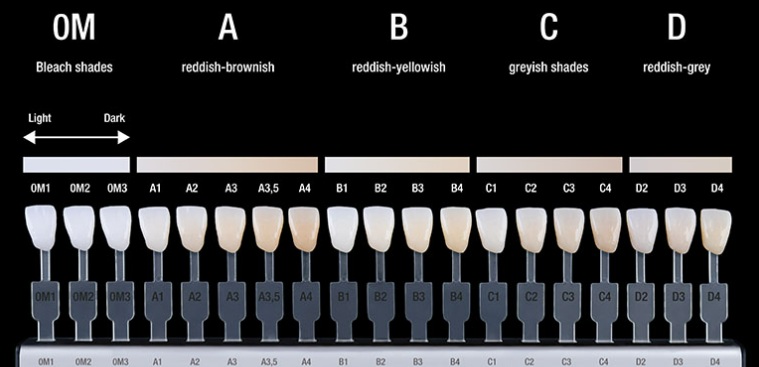
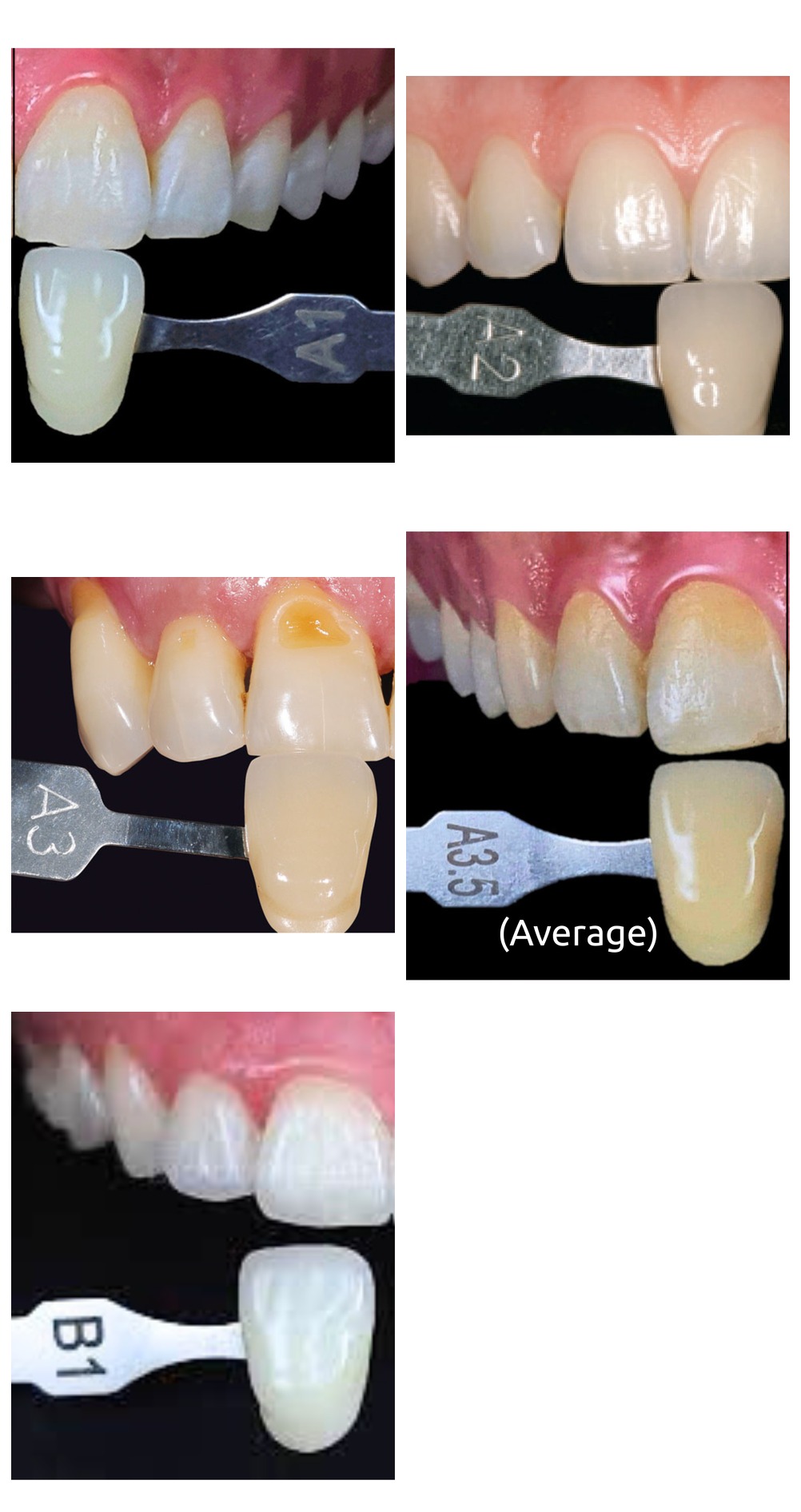
Most healthy adults naturally sit somewhere around A2, A3, or B2–B3. Younger teeth are often A1 to B1. The bright bleach-white BL shades you see in whitening adverts don't occur naturally in adult teeth at all — only whitening produces them.
Why Younger Teeth Look Brighter
Enamel thickness varies only slightly across a tooth — roughly 0.3mm near the edge, up to 0.7mm near the gumline — but even that small difference changes how a tooth looks.
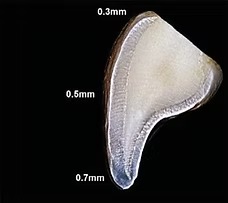
Thicker enamel scatters more light and shows less of the dentine underneath, which is why younger teeth read as brighter.
As enamel thins with age or wear, and the tooth lays down more secondary dentine underneath as a protective response, more of that warm dentine colour shows through. This is normal biological ageing, not a sign you've brushed badly.
When Colour Signals Something Else
Occasionally a shade anomaly points to something worth understanding properly rather than just whitening over.
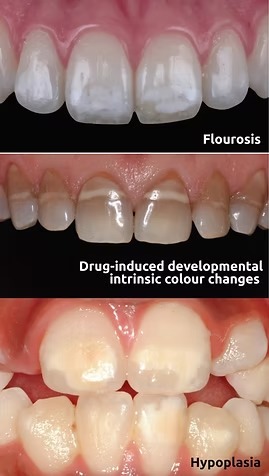
Fluorosis shows as chalky white flecks or brown patches — whitening helps the background shade, but infiltration or bonding is usually needed to blend the patches themselves.
Tetracycline staining sits deep in the dentine as grey, blue, or brown banding. Whitening helps slowly, but veneers are often needed to fully mask it. Hypoplasia shows as cream-yellow opacities with weaker enamel underneath — usually needs whitening plus bonding or veneers, not whitening alone.
Why I Record Your Shade at Every Exam
Your shade tells me how your enamel is wearing, how your dentine is behaving, how old composites are ageing, and whether whitening is likely to work quickly or slowly for you. It's a diagnostic tool, not a judgement.
What Actually Changes Your Shade
Hygiene removes surface staining. Professional whitening lightens both enamel and dentine for genuine, even brightness. Composite bonding restores lost enamel optics and can mask minor anomalies. Porcelain veneers handle the deeper colour issues — tetracycline staining, severe fluorosis, large defects — that whitening alone can't fully resolve.
What Shade Should You Actually Aim For
Not Hollywood white. Not a flat BL1 regardless of your face. The rule stays simple: just slightly lighter than your sclera, in harmony with the rest of your face.
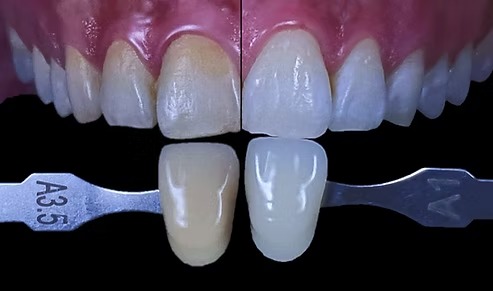
Your teeth should look like a brighter, healthier version of you — not like someone else's teeth. References Magne P. Influence of symmetry and balance on visual perception of a smile. Journal of Cosmetic Dentistry. Paravina RD, Ontiveros JC, Cevik P, Johnston WM. Translucency of enamel and dentin: a biomimetic target for esthetic dental materials. Journal of Esthetic and Restorative Dentistry. Lee Y-K. Opalescence of human teeth and dental esthetic restorative materials. Dental Materials. Hattab FN, Qudeimat MA. Dental discoloration: an overview. Journal of Esthetic Dentistry. Goodman JR, Gilthorpe MS, Roberts IS. Tetracycline-induced discoloration of teeth. British Dental Journal. Sulieman M. An overview of tooth discoloration: extrinsic and intrinsic causes. Dental Update.