
This is diffusion, not damage.
Patients ask this often, and it's a fair question. Here's the actual mechanism behind why properly supervised whitening doesn't damage enamel — not just an assurance, the real chemistry.
What Whitening Actually Does
Whitening isn't sanding, bleaching away enamel, or stripping mineral. It's a chemical reaction that breaks apart the stain molecules trapped inside your tooth.
Where Stains Actually Hide
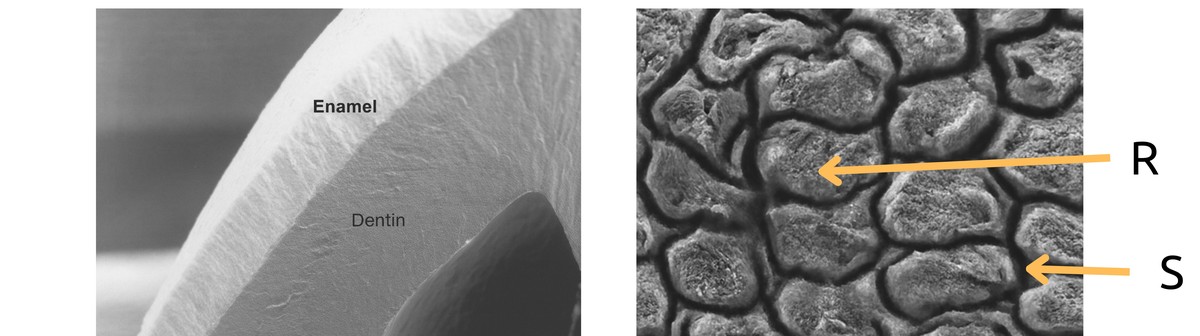
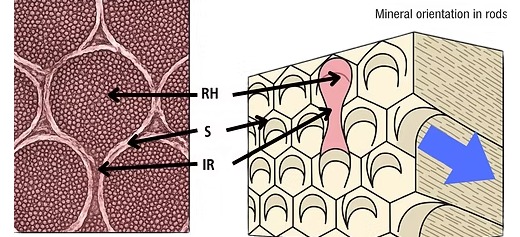
Enamel is made of millions of tightly packed mineral rods, held together by a softer sheath network running between them. This sheath is where stain molecules — chromogens — accumulate over time: coffee, tea, red wine, smoking, sauces, and simple ageing.
They lodge between the rods, on the hydroxyapatite crystals themselves, and inside the tubules of the dentine beneath. Whitening toothpaste, working only at the surface, can't reach any of this.
How the Gel Actually Travels Through Enamel
Peroxide gel enters the enamel and moves along these rod sheaths, reaching the chromogens trapped deep within, then continues into the dentine beneath in low, safe concentrations. This is diffusion, not damage — a 2024 Royal Society of Chemistry review of the whitening literature traces this pathway directly.
Breaking Down the Stain Molecules
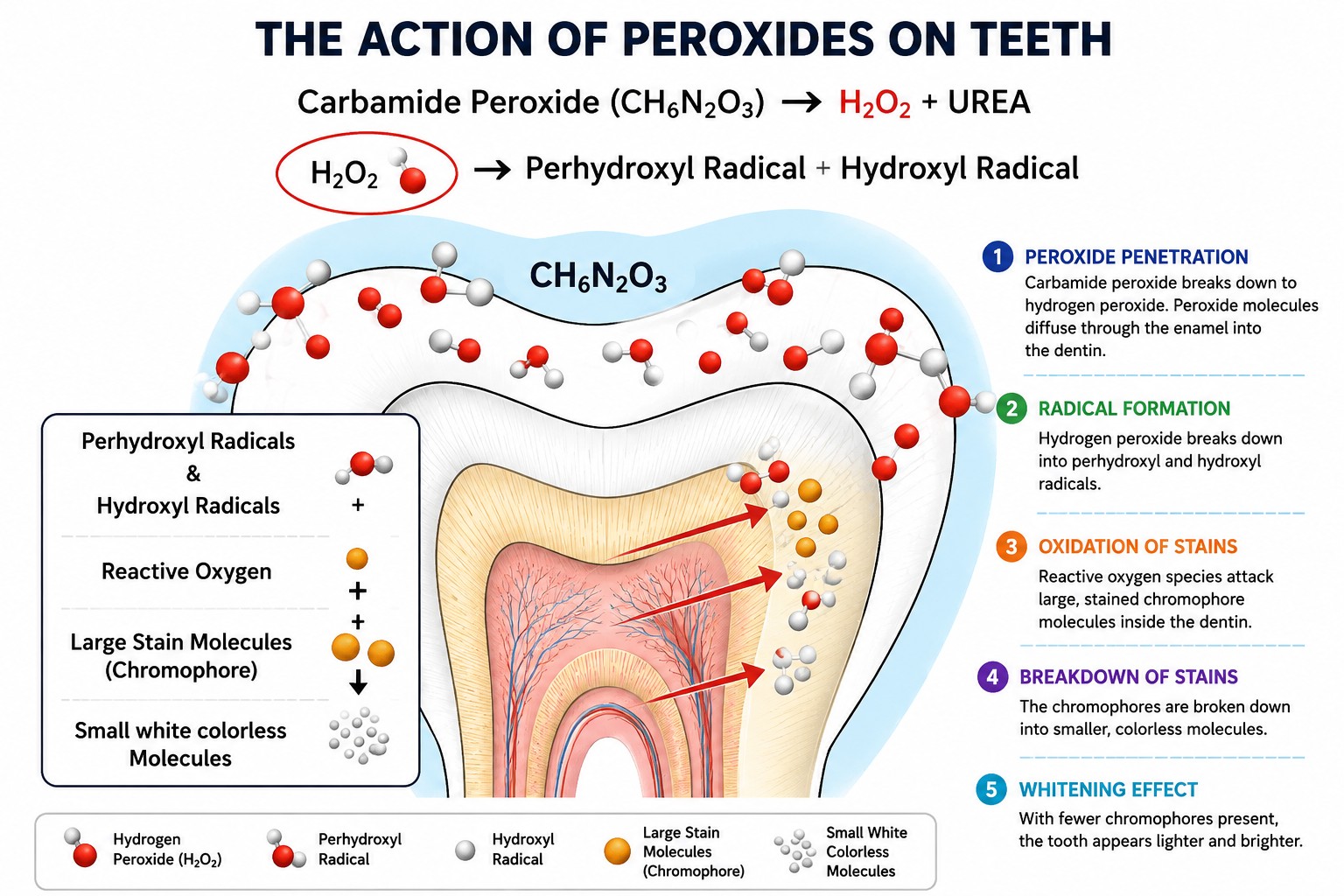
Once peroxide reaches a chromogen, it splits the large coloured molecule into smaller, colourless fragments. Carbamide peroxide breaks down into hydrogen peroxide and urea; the hydrogen peroxide then follows the same path as the chromogens, penetrating the enamel sheaths and breaking the stain molecules apart.
These smaller fragments no longer absorb light the same way, scatter light more cleanly, and let both enamel and the dentine beneath appear brighter. This is why a tooth brightens from the inside, not the surface.
Does Whitening Damage Enamel?
No. Properly supervised whitening does not dissolve enamel mineral, thin the enamel, or weaken tooth structure. The efficacy of whitening is concentration- and time-dependent, which is exactly why professional supply and dental supervision are a legal requirement in the UK — not a formality.
Does Whitening Reach the Dentine?
Yes, and this matters. Dentine sits beneath enamel and carries most of your tooth's underlying colour. Peroxide diffuses into dentine in small, safe amounts, breaking down the deeper chromogens there too — which is what gives whitening its long-lasting effect, rather than a surface polish that fades within weeks.
Why Light Behaves Differently After Whitening
Removing chromogens doesn't just lighten the stain — it changes how light interacts with the tooth. With fewer stain molecules absorbing light, more is reflected back out.
Enamel becomes optically clearer, scattering light more cleanly, and the brighter dentine underneath reflects more light back through that clearer enamel. Together, this is why professionally whitened teeth look brighter and clearer, not just less stained.
Where the Real Risk Actually Sits
Not in properly supervised whitening — in the unregulated alternatives. Beauty salons aren't legally permitted to use peroxide above 0.1%, so anything promising dramatic results there is either ineffective or using something it shouldn't.
Online LED kits mostly just heat the gel, which increases sensitivity without adding any real whitening effect.
Sensitivity, Honestly
Mild, temporary sensitivity is a normal part of whitening for some patients and typically settles within 24 to 48 hours. We manage it with desensitising gel, shorter wear times, and fluoride support where needed — it's a temporary response to the process, not a sign of damage.
Fees
A new patient exam is £64. Boutique Whitening starts at £385 for a straightforward case, rising to £600 for more complex cases, which can include internal bleaching where needed. Every course starts with a consultation, not a guess.