
Ruabon · Wrexham · North Wales
Porcelain veneers. Measure twice, smile once.
Bespoke ceramic shells, digitally designed and hand-built by a UK master ceramist — explained properly, before a single tooth is touched.
Dr Barclay is currently training in advanced cosmetic dentistry under Manrina Rhode (DRMR), one of the UK's leading veneer dentists — bringing that smile-design technique directly into cases here.
What are porcelain veneers?
Porcelain veneers are bespoke ceramic shells, roughly 0.3 to 0.7mm thick, that fit over the front of your existing teeth — custom-made for your mouth, not a stock shape pulled off a shelf.
The smile design stage
Every veneer case starts with a 3D digital scan — no impressions, no gagging. We capture high-resolution images, facial photos, and bite data, then digitally map how each veneer will sit alongside your lips and facial proportions. You'll see a mock-up of the proposed result before a single tooth is touched, and if something needs adjusting, we change the design first, not your enamel.
Preparation
Depending on the case, a veneer may need a small amount of enamel reshaping so it sits flush. Some cases qualify for no-prep or minimal-prep veneers, preserving as much of the original tooth as possible. Most cases use local anaesthetic, and you'll usually leave that first appointment with temporary veneers to live with while the permanent ones are made.
The lab work
Once the design is agreed, your scans go to our UK master ceramist, who hand-builds each veneer layer by layer — porcelain fused, glazed, and polished to mimic the translucency of real enamel. Every piece is checked under magnification before it ever reaches your mouth.
The fitting appointment
Each veneer is tried in and checked before final bonding, so you see and approve the fit first. Bonding itself happens under magnification with the margins polished and your bite re-checked before you leave.
Aftercare
Porcelain veneers aren't high-maintenance — normal brushing and flossing, a routine airflow polish once or twice a year, and avoiding pen-chewing, hard nuts, and ice. A quick check and polish every twelve months keeps them looking as they should for years.
What does the evidence say?
Porcelain veneers show 91 to 96% survival at ten years in the literature. Minimal-preparation designs cause less post-treatment sensitivity and maintain better gum health than heavier preparation, and longevity depends more on technique and bite management than on porcelain thickness alone.
How much does it cost?
Porcelain veneers typically range from £900 to £1,200 per tooth. That covers the design work, scanning, lab fabrication by a master ceramist, and the after-care built into the guarantee. It's a fair question why prices vary so much between clinics — real dentistry is closer to architecture than demolition, and rushing the design phase is exactly how an over-prepared, unnatural result happens.
Composite bonding or veneers — which is right for me?
Bonding suits chips, gaps, wear and minor colour changes, keeping almost all of your own tooth intact. Veneers suit a bigger colour or shape change, or where longer-term strength and colour stability matter more than minimal intervention. We'll tell you honestly which fits your case — sometimes it's a mix of both across different teeth. See our composite bonding page for the alternative.
A real DRJB case, years in the making
Composite bonding first. Veneers and crowns when it mattered.
Not every case starts with veneers, and this one didn't. She came in years ago, had composite bonding, and was genuinely thrilled with it. Composite doesn't last forever though — it's why we're upfront that bonding is a repair, not a permanent material. When hers eventually broke down, the honest next step was porcelain: veneers and crowns, planned properly and built to last.
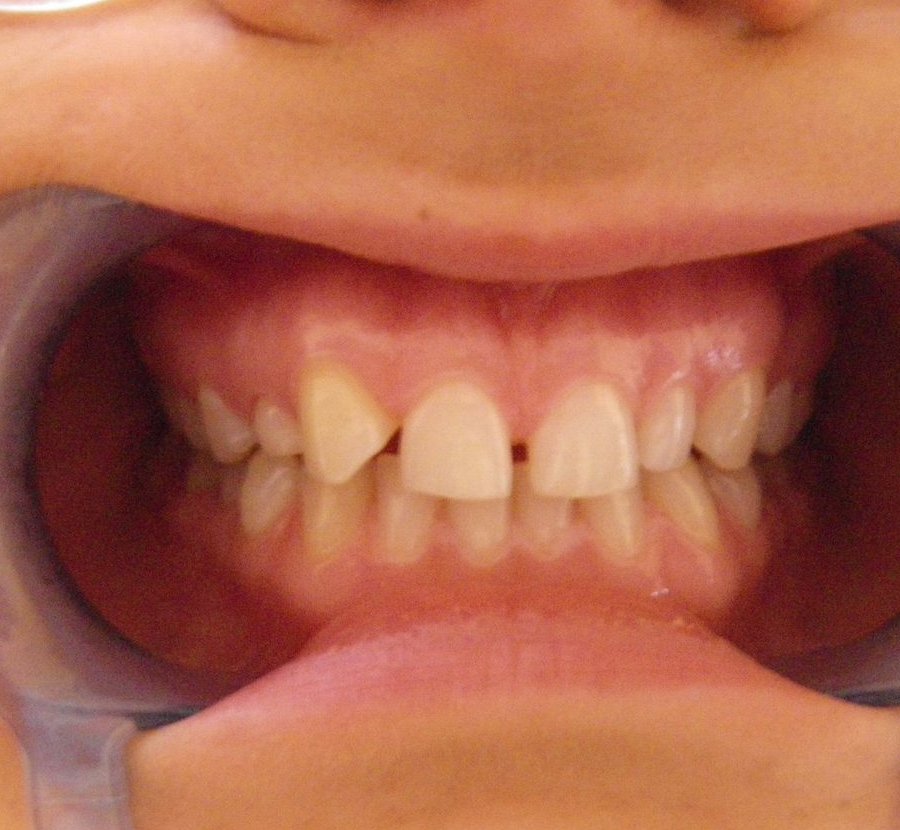
1. Before
Where it started — the kind of wear and unevenness nobody's in a rush to fix, until it starts to bother them.
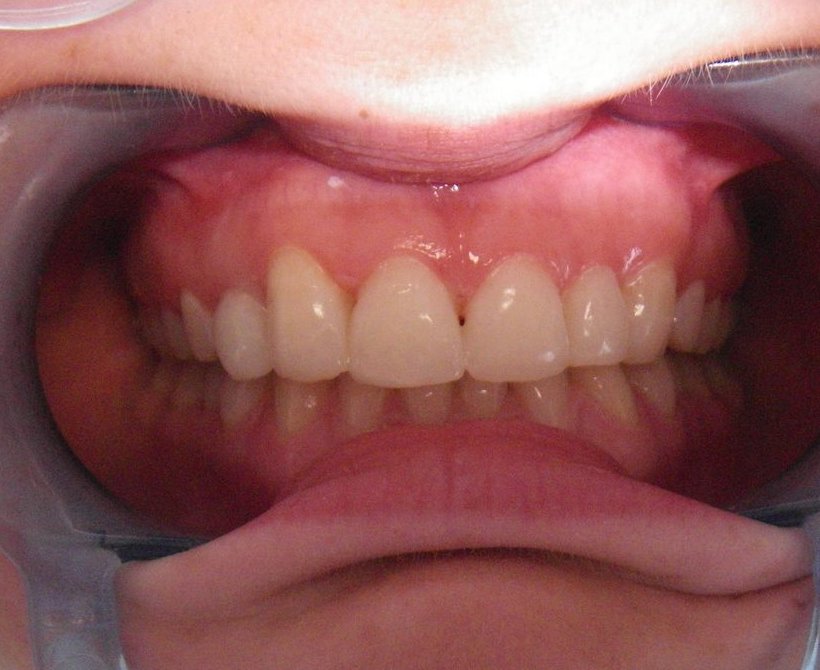
2. The first fix — composite bonding
A conservative composite rebuild, done years ago. Quick, affordable, and she was genuinely happy with it at the time.
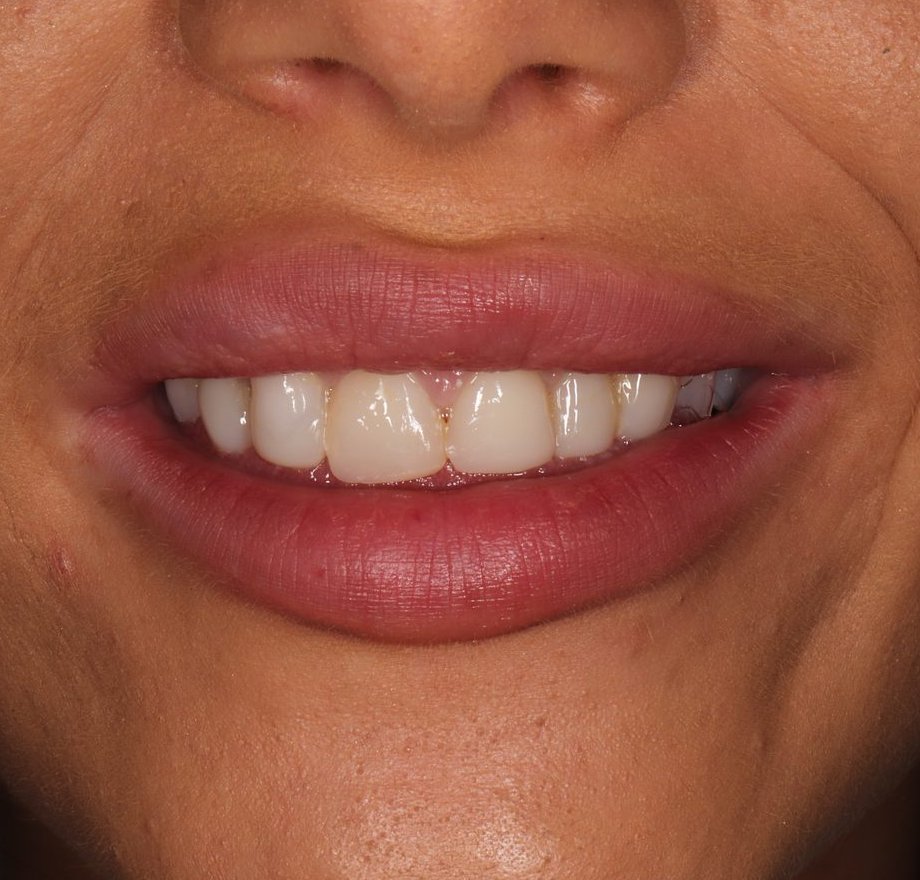
3. Years later, it broke down
Composite doesn't last forever. A shade mismatch and an open contact were the sign it was time for something more permanent.
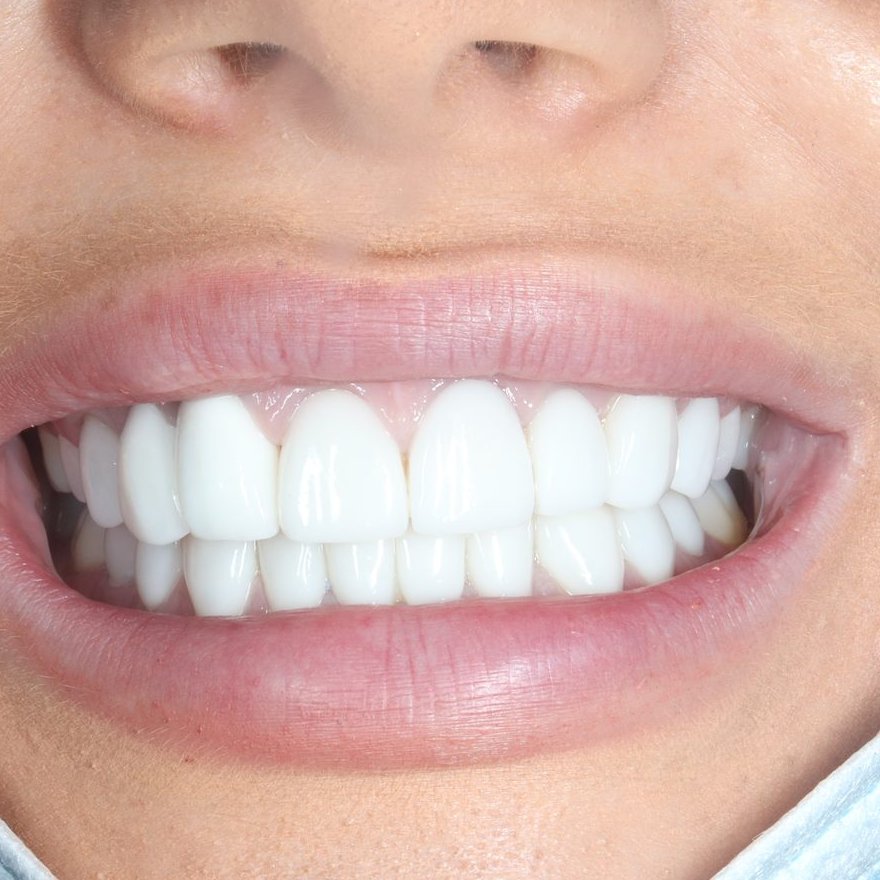
4. Veneers and crowns
A redesigned smile in porcelain this time — planned properly from a digital scan, and built to last. The shade is bright by design — her choice, not ours.
Read the Full Detail
Porcelain Veneers Explained: What They Are & How They Work
How Much Do Veneers Cost — And Why Some Smiles Cost More Than Others
Composite Bonding vs Veneers – Which Is Right for You?
Is Composite Bonding Right for Me? (And When Veneers Might Be Better)
Wondering whether veneers are right for your smile?
Request a free consultation